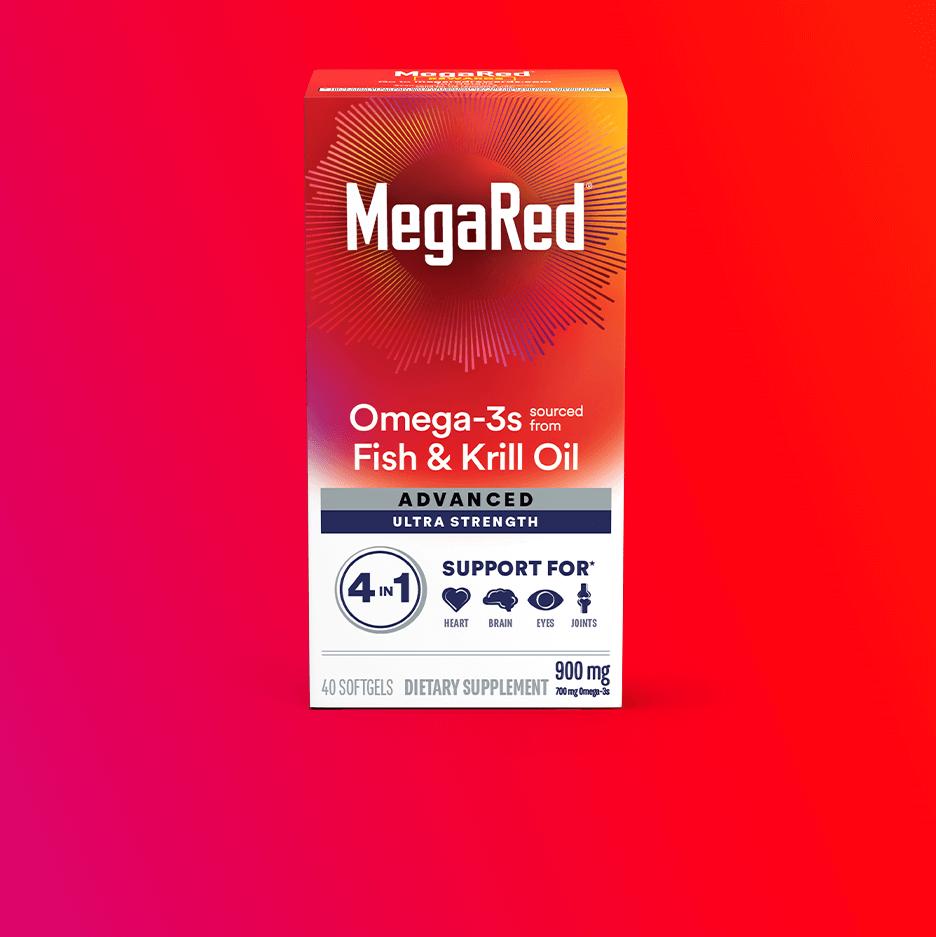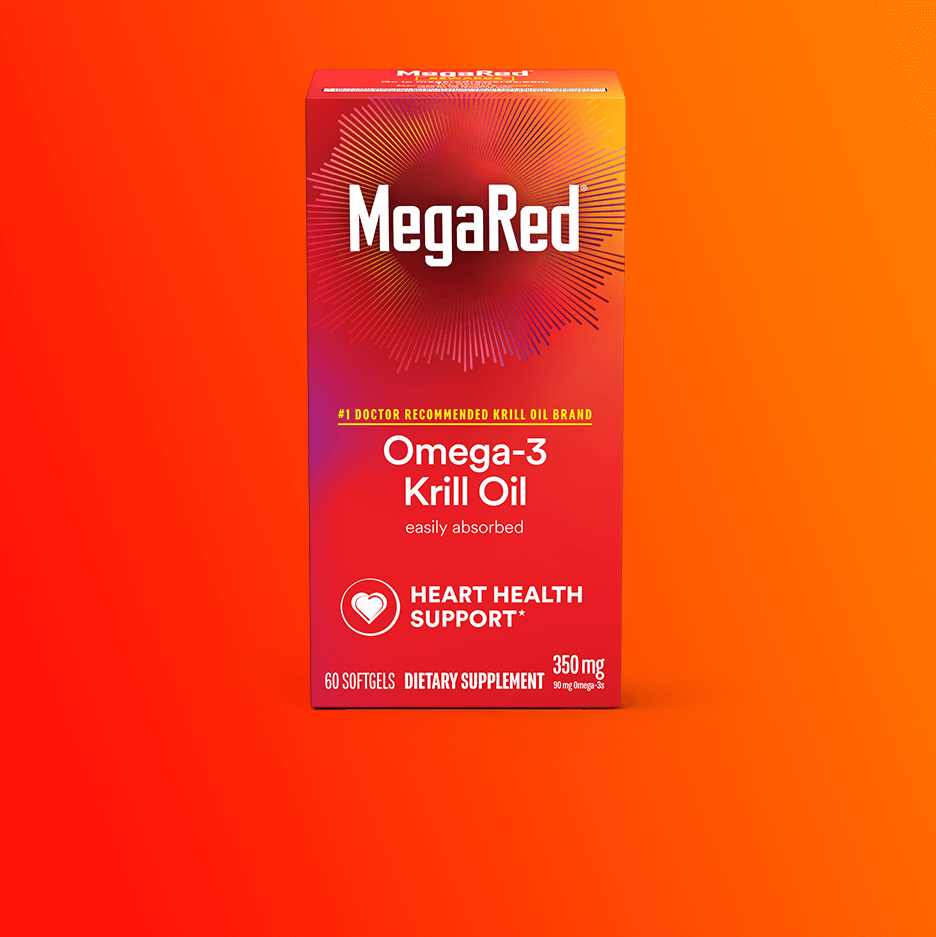
Schiff Mega Red
SCIENCE BEHIND INGREDIENT

 
a. Antarctic Krill

Krill is a shrimp-like crustacean mostly found in the Northern (Arctic) and Southern (Antarctic) seas of the earth. There are about 85 species of krill, including Euphausia superba, E. pacifica, E. nana, etc.. The latter two are much smaller and live in other oceans (Aker 2009, Martin 2007, Nicol 1994). Other species of crustaceans live in the North Atlantic but they are also smaller and only live 1-2 years vs. Euphausia superba (E. Superba) that can live up to 8 years, the species used in MegaRed® (Martin 2007).

The most abundant and most studied species of krill and the world's largest single species biomass is Euphausia superba Dana (also called Antarctic krill) (Falk-Petersen 2000, Gascon 2006). E. superba is found in Antarctic waters at depths of about 100-200 meters south of the 55° S latitude between the coast of Antarctica and its seasonal pack ice edge, and is believed to amount to the order of up to 400 to 500 million metric tons (human biomass is 250 million metric tons) (Aker 2009, Demer 2004, Ewing 1991, Falk-Petersen 2000, Greene 1991, Nicol 1997, Nicol 1999, Siegel 2004). Krill feed on phytoplankton and algae (Atkinson 2004, Fach 2008, Hewitt 2000, Nicol 1994), but they have an opportunistic feeding pattern and may feed on almost any available plankton (Frazer 1996, Hopkins 1993, Perissinotto 1997, Quetin 1994). Thus krill play an important role in the ecosystem of the Arctic and Antarctic seas.

Euphausia superba have a size of up to 7 cm and have a chitinous exoskeleton. The krill anatomy has a few characteristic features such as combined filter legs and ice rakes attached to their heads, and unlike shrimp they have externally visible gills.

The life cycle of krill is amazing. Its life span may be between 6-8 years and krill reach maturity only after 2 to 3 years (Aker 2009, FAO 2007, Hewitt 2000). After mating (reproduction usually occurs between November to April), gravid female krill can be found at depths of up to 3000 meters (Clarke 2008, Falk-Petersen 2000). Egg development occurs during spring and in the summer several thousand eggs per female are laid in the upper 100-200 meters of water (Clarke 2008, FAO 2007) and then sink for about 10 days to a depth of around 2,000 to 3,000 meters (Aker 2009, FAO 2007, Marr 1962, Nicol 1994, Nicol 2006). They go through as many as 10 different stages of development as they rise to the surface (Clarke 2008, Hewitt 2000, Nicol 1994). They must live through the first stages on their yolk reserves avoiding predators until they reach the growth zone. The success of reproduction is positively correlated with early spawning followed by extensive ice cover in the preceding winter. Adult krill retreat under the advancing ice cover in the fall/winter (Falk-Petersen 2000). Krill is truly adapted to the cold winters of the Antarctic, enjoying their success in both temperate summers and harsh winters.

 
b. Krill and Krill Oil Composition

Krill contains on a wet basis about 10-11% protein, 2-6% lipids, 0.3-0.6% carbohydrates, 2% chitin, and 3-4% mineral ash (Clarke 1980, Kolakowska 1993). On a dry basis krill contains 60-78% protein, 7-26% fat, and 12-17% mineral ash (Savage 1987). The composition of lipids in krill depends on several factors, including gender, maturity stage and diet (Alonzo 2005, Bottino 1974, Bottino 1975, Clarke 1980, Mayzaud 1998, Phleger 2002). The major lipid classes are phospholipids (33-42%; phosphatidylcholine, phosphatidylethanolamine), triacylglycerol (33-40%), free fatty acids (8-16%), free sterols (1.4-1.7%), and sterol and wax esters (trace) (Falk-Petersen 2000, Fricke 1984, Kolakowska 1993, Mayzaud 1998). The major fatty acids found in krill were myristic 14:0 (2-15%), palmitic 16:0 (18-29%), palmitoleic 16:1 n-7 (2-7%), stearic 18:0 (1-13%), asclepic 18:1 n-7 (3-13%), oleic 18:1 n-9 (7-21%), EPA 20:5 n-3 (15-21%), and DHA 22:6 n-3 (9-14%) (Cripps 1999, Falk-Petersen 2000, Fricke 1984, Phleger 2002).

A significant proportion of the long-chain omega-3 fatty acids in krill are in phospholipid form, as phosphatidylcholine and phosphatidylethanolamine (Aker 2009, Fricke 1984). In contrast, omega-3 derived from algae, cod liver, seal, and/or fish oil are almost exclusively omega-3 triacylglycerol fatty acids (Aker 2009). Phospholipid-bound omega-3 fatty acids are water dispersible, unlike the omega-3 provided by fish oil. This property is one of the factors favorably affecting the ways our body can absorb and utilize the omega-3 in krill oil.

Antarctic krill is also rich in the natural antioxidant astaxanthin and is the cause of the deep red color of each krill softgel (Aker 2009, Grynbaum 2005, Savage 1987). The majority of astaxanthin is found as astaxanthin fatty acid esters in krill (astaxanthin attached to C14:0, C16:0, C16:1, C18:1, C20:0, C20:5, and C22:6) (Grynbaum 2005, Takaichi 2003). Krill has a slow accumulation of storage lipid and short resident time of dietary fatty acids which suggests that lipid turnover rates are high in Antarctic krill (Alonzo 2005).

Fatty acids in krill are not distributed randomly among lipid classes, though they are influenced by regional populations and variation in diet (Cripps 1999, Le Grandois 2009). Eicosapentaenoic acid (EPA; 20:5 n-3) and docosahexaenoic acid (DHA; 22:6 n-3) are almost exclusively found in the phospholipid form, which is almost half of the fatty acids in this class (Alonzo 2005, Hagen 2001, Stübing 2003). Other fatty acids are approximately distributed evenly among phospholipid form and triacylglycerol form (Alonzo 2005).

Another part of krill composition is its mineral content. Four essential trace minerals (copper, iron, manganese, and zinc) have been found in krill slurry preparations as well as other trace minerals (Alves 2000, Moren 2006, Tou 2007). Krill is also rich in calcium, fluoride, magnesium, and phosphorus (Budzinski 1985, Savage 1987, Tou 2007).

Krill also contain vitamins such as vitamin A, vitamin E, and B-vitamins, especially B12, B6, and folate (Tou 2007). Interestingly, krill do not contain Vitamin D - only animals with a backbone have Vitamin D.

This site is designed exclusively for the use of healthcare professionals seeking to learn more about Schiff® MegaRed®. Please visit the Schiff® MegaRed® consumer website for consumer information.
THESE STATEMENTS HAVE NOT BEEN EVALUATED BY THE FOOD AND DRUG ADMINISTRATION. THESE PRODUCTS ARE NOT INTENDED TO DIAGNOSE, TREAT, CURE OR PREVENT ANY DISEASE.
† Supportive, but not conclusive research shows that consumption of EPA and DHA Omega-3 fatty acids may reduce the risk of coronary heart disease.
*Source: *IRI Sales data March 6, 2011, overall 52 week FDMx sales (excluding Walmart) by stock keeping unit.

© 2012 Schiff Nutrition Group, Inc.